What is a Mesnevihan? The Lost Art of Indigenous Psycho-Education
Today, we tend to view mental health through a very specific, commercialized Western lens: an asymmetric, one-on-one professional relationship where you pay a therapist once a week to listen to your personal traumas while they remain largely silent.
But classical Islamic societies had different avenues for cultivating mental well-being. Alongside the natural mentorship found within large families, there were institutionalized methods. One of the most profound is the tradition of the Mesnevihan.
A Mesnevihan is an authorized reader and commentator of Jalaluddin Rumi’s six-volume masterpiece, the Masnavi. But this isn't just dry, aristocratic literary commentary where academics ramble about complex topics. It is a form of indigenous psycho-education centered entirely around sohba (meaningful companionship). Rumi referred to this gathering as a "shop of unity." Everyone—including the scholar, who must open their heart to teach—is looking toward the same spiritual goal.
Instead of putting individual traumatic experiences at the center of the session, the Masnavi puts the truth at the center, using stories. By using fables featuring animals like parrots and lions, or characters like merchants and kings, this method brilliantly bypasses our natural defense mechanisms. If a Sheikh confronts a man directly about mistreating his wife, the man’s ego will immediately spring up to defend itself. But if the Mesnevihan tells a story about a rabbit and a lion, the lesson slips past the ego and lands directly in the heart.
The History and Survival of a Sacred Institution
The Mesnevihan tradition is shockingly unknown in the English-speaking world, yet it was a cornerstone of the Ottoman world. The authorization (ijaza) to lead these gatherings traces all the way back to Husam al-Din Chalabi, Rumi’s scribe and closest companion, who began publicly reading and explaining the text after Rumi's passing in 1273.
Historically, this tradition wasn't confined to a single group; it was considered a shared societal and cultural paradigm of spirituality and learning. It took place in various settings:
Tekkes (Sufi lodges): Where it was a weekly, central event.
Imperial Mosques: Such as the magnificent Süleymaniye in Istanbul, where reading it was a formalized ritual.
Specialized Institutions: Buildings in neighborhoods like Fatih, Istanbul, constructed specifically for public Masnavi readings.
Royal Palaces: Ottoman Sultans financed these institutions and hosted readings in their own homes.
Madrasas: Where it formed a core part of a student's cultural, psychological, and religious education.
The format itself was beautiful and ritualistic. It featured two pedestals: one for the main reader explaining the text, and a backup reader to gently correct any mistakes. The environment was not dry or academic; it was deeply emotional, empathetic, sincere, and devoted.
Sadly, when Turkey banned Sufi orders and tekkes in 1925, the Mesnevihan was outlawed in its homeland. However, the tradition survived in the Balkans—an indigenous Muslim community in Europe. To this day, in cities like Sarajevo, Bosnia, the tradition thrives, with authorized Mesnevihans gathering communities week after week to transform their psychology and societal connection.
This provides something utterly missing from the life of the average modern Westerner: a space to regularly hear deeply uplifting, emotionally resonant wisdom in the company of empathetic peers, rather than just grim news or "productive" self-help.
Understanding the Masnavi: The "Quran in Persian"
So, what exactly is the Masnavi? Its full title is Masnavi-ye Ma'navi, meaning "The Rhyming Couplets of Deep Meaning." Dictated between 1258 and 1273, these six volumes represent Rumi’s most mature teachings—his educational inheritance for humanity.
If you assume this is just pretty, lyrical poetry describing nature, think again. The Masnavi is emotionally dense, highly systematic, and structured like a Matryoshka doll: stories nested within stories. In clinical therapy, this is exactly how human psychology works. You start by discussing a current problem, which opens up a story about family, which opens up a story about childhood. A skilled therapist knows how to keep track of these open loops and eventually close each one to provide healing. Rumi does the exact same thing.
The work also mirrors itself in themes:
Books 1 & 2: Diagnosing the Nafs (understanding your ego).
Books 3 & 4: Reason vs. Knowledge (intellectual vs. experiential understanding).
Books 5 & 6: Dissolving the Ego (silencing the inner voice that torments us).
Because of this depth, completing a cycle of the Masnavi takes years (Dr. Francesca notes she is still halfway through Book 1 after three years with her circle!).
The Masnavi is famously—and sometimes controversially—referred to as "The Quran in Persian." This does not mean it replaces the Quran. Rather, Rumi intended to translate the inward meanings and contents of the Quran for a Persian cultural spirit. Rumi himself stated he wanted to write the "roots of the roots of the roots of religion." The text contains 528 direct quotes from the Quran and around 2,000 indirect quotes, alongside hundreds of Hadith.
It acts as a dramatization of Quranic themes. Just as Islam was taught in Indonesia through shadow theater, Rumi used Persian poetry to dramatize stories of creation, Prophet Musa (AS), and Prophet Yusuf (AS), making the Quran come alive for his audience.
Therapy Through Storytelling: 5 Masterclasses from the Masnavi
The entire Masnavi functions as a psychological work. Let's look at five specific stories that act as therapy for the soul:
1. The Song of the Reed (The Prelude)
The book opens with a flute crying out in heartbreaking pain. Why is it crying? Because it has been cut from its reed bed.
Rumi uses this to explain the human condition: we are existentially homesick. Before we were put into bodies, we testified to Allah’s lordship on the Day of Alast. Now separated from that divine closeness, we carry a wound of longing that nothing in this dunya (worldly life) can fulfill.
Modern Western psychology often treats this deep unrest as pathological—a symptom of depression to be suppressed or medicated away. Rumi’s insight is profoundly different: Your suffering is purposeful. The crying is the engine that drives you to return to Allah. Furthermore, just as the flute’s anguish produces beautiful music that touches others, our internal pain can be transformed into a voice for beauty and good. In the Mevlevi path, suffering and love hold immense transformative power.
2. The King and the Handmaiden (Book 1)
A king falls in love with a handmaiden, but she immediately falls mysteriously ill. The king summons the finest physicians, but they all fail to cure her. Rumi points out their flaw: they relied arrogantly on outward signs, empirical expertise, and intellect alone, forgetting to say Inshallah (God willing).
In desperation, the king prays, and a spiritual physician arrives. He does what the others didn't: he sits with her, takes her pulse, asks about her life, and realizes she is psychosomatically lovesick. Physical medicine couldn't cure an emotional and spiritual ailment.
Centuries before Western medicine recognized psychosomatic illness, Rumi taught that there are types of human suffering that intellect and empirical approaches cannot access. We need a different type of "seeing" and healing—exactly the kind provided by the Mesnevihan space.
3. The Boiling Chickpea (Book 3)
A chickpea is boiling in a pot, furious at the cook. It keeps trying to jump out, but the cook pushes it back down with a ladle. The chickpea protests the cruelty, but the cook responds with deep empathy: "I am not boiling you because you are hateful to me. I am boiling you so you may get taste and savor, so you can become nutrient and mingle with the vital spirit." The cook reveals he, too, was once raw from the ground and had to endure the fierce boiling of life.
Hearing this, the chickpea happily surrenders, asking the cook to boil it some more.
This is what modern psychology calls "post-traumatic growth." Hardship doesn't just leave us triggered for life; if met with the right orientation, it brings wisdom, resilience, and compassion. But Rumi knows that directly telling a suffering person "be patient" doesn't work. Instead, he makes us laugh and empathize with an angry chickpea, helping our ego actively consent to our own transformative processes.
4. The Parrot and the Merchant (Book 1)
A merchant is traveling to India and asks his beloved caged parrot what gift it desires. The parrot simply asks the merchant to tell the wild parrots of India about its caged condition. The merchant does so, but upon hearing the news, a wild Indian parrot immediately drops dead.
Horrified, the merchant returns home and regretfully tells his parrot what happened. Instantly, his own parrot drops dead in its cage. Heartbroken, the merchant takes the "dead" bird out of the cage and throws it away—at which point the parrot springs to life, flies away, and earns its freedom!
The wild parrot sent a coded message: The way out of the cage is to die.
Psychologically, the cage represents the ego (nafs), our comfortable prisons, and our false identities. The profound truth here is that you cannot think your way out of the ego's cage. The only way out is a kind of death—what in Tasawwuf (Sufism) is called Fana (annihilation of the self). Again, no one wants to hear a therapist tell them to "die to their attachments." But through a performed, action-based story, the defense mechanisms are bypassed, and the truth lands. Growth requires a figurative death, and it will not feel good until it finally does.
5. The Man at the Door (Book 1)
A man knocks on his friend’s door. The friend asks, "Who is there?" The man replies, "It is I." The friend says, "Go away. At such a table there is no place for the raw."
The man wanders for a year, burning in the fire of separation. He returns and knocks again. "Who is there?" The man replies, "It is you." The friend opens the door, saying, "Since you are me, come in. There is not room for two I's in one house."
This miniature story encapsulates the entirety of Rumi's teachings. "Raw" and "Cooked" are technical terms for spiritual immaturity and maturity. (Rumi famously summarized his own life as: "I was raw, I was cooked, I was burnt." In the Mevlevi tradition, the person leading the 101-day Chilla training for dervishes is literally called the Ser-ashchi, the head cook!).
Many modern therapy patients are trapped in an exhausting loop of "I": my needs, my rights, my trauma, my identity. While acknowledging these is a necessary starting point, ultimate healing requires cooking the soul, dissolving the boundaries of the ego, and recognizing oneself in the other.
Addressing Modern Mental Health Crises
We are living through what experts call a mental health and meaning crisis, characterized by record levels of anxiety, depression, and loneliness. The UK even appointed a Minister for Loneliness! How does Rumi speak to this?
1. The Epidemic of Loneliness
Modern therapy is deeply individualistic; you process your pain alone in a room with a professional. The Mesnevihan tackles loneliness structurally through sohba (communion). Gathering physically with a circle of people who share your spiritual orientation is profoundly healing. As Rumi wrote: "You attain to knowledge by argument. You attain a craft or skill by practice. But if voluntary poverty [spirituality] is your choice, companionship is the way, not hand and tongue."
2. The Meaning Crisis
Philosopher John Vervaeke notes that modern people suffer from four disconnects: from self, others, the world, and the future. The Masnavi cures all four:
Self: The Song of the Reed reconnects us to the deep meaning behind our internal pain.
Others: The communal Sohba creates profound peer connection.
The World: Rumi's metaphors teach us to look at nature and polish our hearts to see reality clearly.
The Future: The entire arc of the book prepares the reader for the afterlife, fostering a deeply hopeful, optimistic Islamic worldview—a stark contrast to the modern feeling that "we are doomed."
Western medicine’s default response to suffering is a prescription, stripping away meaning. The classical Islamic model asks: Did you address the heart? Does this suffering have a meaning?
Social Media, Narcissism, and "Manifesting"
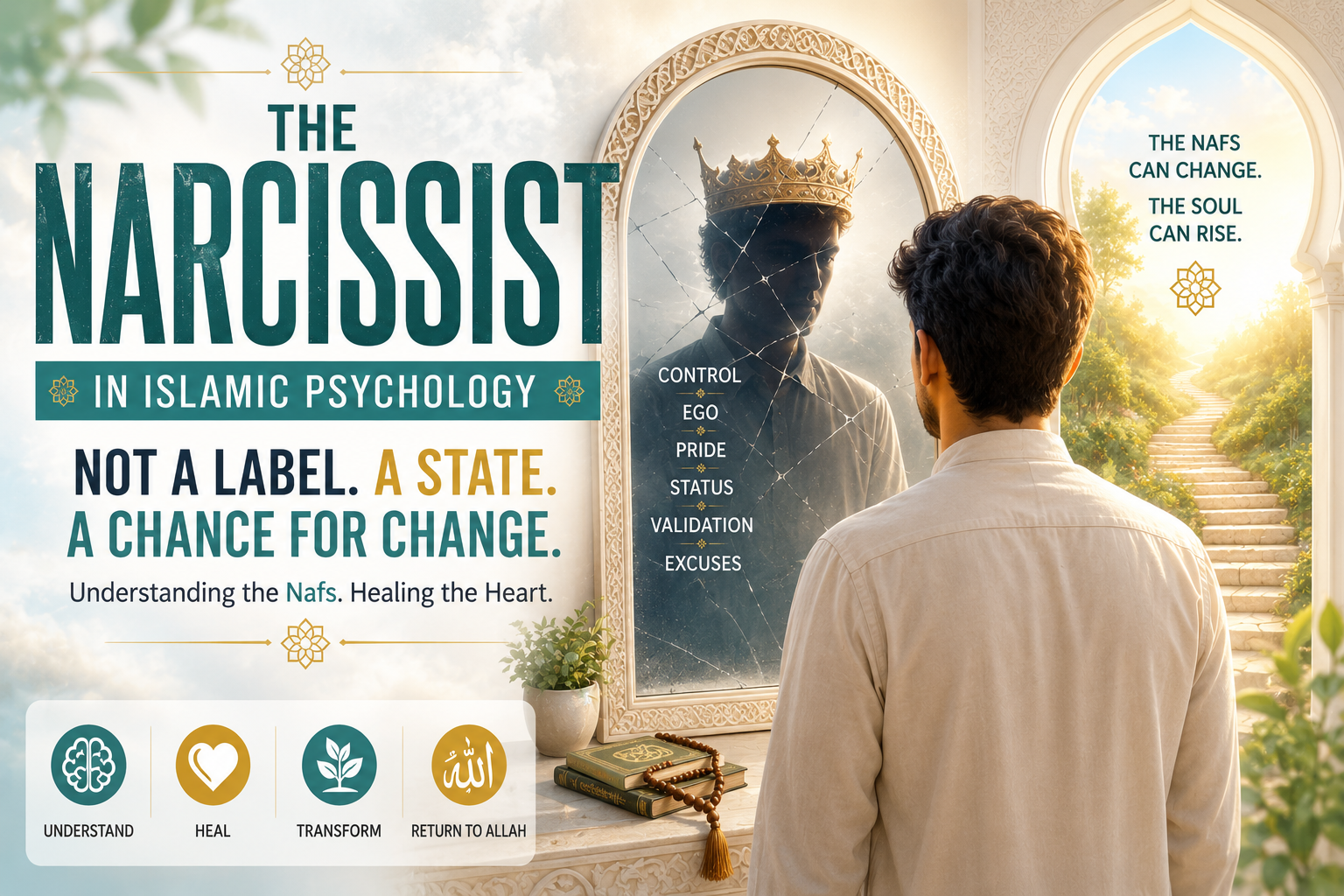
What would Rumi say about Instagram and TikTok? He would say we are worshiping the idol of the Nafs al-Ammara (the ego that commands to evil) and disguising it as "self-care." Social media inflates the ego and normalizes the most harmful ways to "want" things.
Furthermore, Dr. Francesca points out the spiritual danger of internet "Manifestation" culture. Manifesting is a dangerous inversion of the spiritual world. It shifts the focus away from Allah disclosing what He has planned for you, and instead puts your ego in the driver's seat, demanding reality bend to your desires. Rumi would tell us to work at the root cause: cook and dissolve the ego that is desperately seeking attention in the first place. Stop knocking on the door shouting, "It is I!"
The "Fake" Western Rumi
To truly benefit from Rumi, we must peel back the layers of Western appropriation. We’ve all seen the Instagram quotes, and even McDonald's has allegedly utilized his words. The biggest culprit in this distortion is Coleman Barks.
While Barks is a talented poet, he did not read Persian and was not Muslim. He took Rumi's material, stripped away its deep Islamic roots, and fashioned a version of Rumi that sounds like a Californian life coach.
As scholar Ibrahim Gamard has highlighted, these translations drastically alter the meaning. Take the famous "Guest House" poem, often used today to promote a Buddhist-inspired "radical acceptance" of all emotions. In reality, Rumi is praying to Allah for protection from the evil of sorrow, acknowledging that God sends these emotional states to draw us closer to Him—a very different theological concept.
Worse still are the fabricated quotes. Lines like "I am not a Christian, not a Jew, nor a Zoroastrian, nor a Muslim" were never said by Rumi. The famous "Come, come, whoever you are... even if you have broken your repentance a hundred times" actually belongs to a later poet, Abu Sa'id Abu'l-Khayr.
Stripping Islam out of Rumi is intellectually dishonest. To clear up any confusion on where Rumi actually stood, he wrote:
"I am the servant of the Quran as long as I live. I am the dust on the path of Muhammad, the chosen one. If anyone interprets my words in any other way, I am deplored by him and I deplore his words."
(One wonders if Madonna knew that quote before allegedly citing him!)
How to Engage with the Masnavi Today
If you feel stirred to explore this authentic tradition, here is how you can start:
Read an Authentic Translation: Avoid Coleman Barks. Look for the highly regarded translations by Alan Williams (The Masnavi of Rumi with the Persian text and explanatory notes) or Jawid Mojaddedi.
Read it in Community: This is not individual work, and it is not meant to be casual bedtime literature. Gather with friends, read it together, and comment on it. Seek out companionship.
Treat it as Medicine: Recognize that this text is medicinal, not just beautiful "Shakespearean" literature. Rumi called it the "remedy for the hearts."
Embrace the Boiling: As you read, allow yourself to be like the little chickpea. Resist the urge to jump out of the pot when the teachings challenge you. Allow yourself to be transformed.
Historically, Muslims survived indescribable trauma—the Crusades, the Mongol invasions—with their mental and spiritual health intact. They did so using traditions like the Masnavi. Rather than merely replicating commercial Western therapy models, it is time to revive these deeply rooted Islamic avenues to provide real healing for a suffering world.
Source Video and Credits: https://youtu.be/QGHVEyQ7-ZM?si=0de9G1dZUbhm6MXW





Leave a Reply
Your email address will not be published. Required fields are marked *